Tag: Roman Empire

  • Commentary on Luke 2:[1-7] 8-20

    Commentary on Luke 2:[1-7] 8-20

    This article was first published on Working Preacher.

    The nativity story is so familiar that it is almost rote at this point. We read the story. We sing the story. We watch our littles pretend to be sheep, shepherds, and stars. 

    I find it easy, maybe comforting even, to imagine the nativity events that Luke describes as tranquil: a beaming new mother and father admiring their sleeping infant while stable animals sleep around them. A silent night, indeed. 

    Yet, for those there, this was a world changing event. 

    Beyond being a new mother with a whole new set of responsibilities, Mary had the added burden of knowing her son was called to be an heir to King David (1:32). What could that mean when King Herod is already on the throne and the Emperor reigns supreme? 

    Joseph knew the child wasn’t his own; Luke has no account of an angel explaining the situation to him. How much faith would it require to believe Mary’s account of things? What if people found out he was not Jesus’ father? His decision to raise Jesus as his own was not so simple.

    Perhaps the shepherds expected a messiah1, but did they expect this messiah to enter the scene this way on this night? And why on earth would the birth announcement of a king be made to shepherds on the midnight shift?

    The birth of Jesus, as Luke tells it, has a lot of distinguishing features. There’s the emphasis on Mary and Elizabeth’s experiences over those of Joseph and Zechariah. Jesus is born in a stable and sleeps in an animal’s feeding trough. It is shepherds who first learn of Jesus, not Magi bearing costly gifts. Mary’s spontaneous song identifies the ways that God is working on behalf of the low-status and materially bereft. In fact, most biblical scholars agree that Luke emphasizes Jesus’ humble beginnings and actions on behalf of the poor and oppressed. 

    With all of this emphasis on low-status people and the humble elements of Jesus’ birth, it is easy to overlook the political dimensions Luke incorporates. Consider the angel’s announcement to the shepherds: “Do not be afraid; for see—I am bringing you good news of great joy for all the people: to you is born this day in the city of David a Savior, who is the Messiah, the Lord” (2:10-11).

    Luke uses language to describe Jesus that imperial propaganda applied to Caesar Augustus:

    “It seemed good to the Greeks of Asia, in the opinion of the high priest Apollonius of Menophilus Azanitus: 

    ‘Since Providence, which has ordered all things and is deeply interested in our life, has set in most perfect order by giving us Augustus, whom she filled with virtue that he might benefit humankind, sending him as a savior, both for us and for our descendants, that he might end war and arrange all things, and since he, Caesar, by his appearance (excelled even our anticipations), surpassing all previous benefactors, and not even leaving to posterity any hope of surpassing what he has done, and since the birthday of the god Augustus was the beginning of the good news for the world that came by reason of him,’ which Asia resolved in Smyrna”

    This inscription (emphasis mine), written when Augustus was an adult commemorating his birthday, references the birth of Augustus Caesar as the beginning of a new era in which there will be peace and prosperity. Augustus, himself a god, is said to be a savior sent by Providence whose birth was the beginning of good news. The words for savior (soter) and good news (euangelion) are the same words used in Luke when the angel reports the birth of Jesus to the shepherds. 

    Further, this inscription makes the claim that Augustus was sent to end war. After the announcement to the shepherds, multiple angels appear saying, “Glory to God in the highest heaven, and on earth peace among those whom he favors!” (2:14). Not only is the advent of the savior Jesus good news, Luke claims that God is the one who brings peace. These claims are in stark contrast with the claims of Rome and the emperor. 

    In our American context the notion of Jesus as king is a spiritualized metaphor devoid of much of its political emphasis. But in the ancient world, a king held real power for real people. A king’s choices had impacts on food distribution, health, wealth distribution, and more. 

    Augustus claims to have brought peace and to be a great benefactor to all humankind. Yet wealth distribution in the empire was inequitable; while about 3% controlled 90%+ of the empire’s wealth, most people hovered around or below subsistence level.2 The empire taxed its people extensively. Taxes were paid in kind, and a small farm could be taxed as much as 75% of its yield, depending upon how corrupt the individual tax collectors were. The Pax Romana (Roman Peace) was the result of violent subjugation, not radical inclusion. Augustus’ rule often benefited the few at the expense of the many.

    Jesus, heir of David, is a different kind of king altogether. His birth announcement is delivered to shepherds in the middle of the night. Without coercion, his peace will come to those who accept his teaching and follow God. His work will be known not through self-serving monuments and inscriptions, but through relationships. His cohort is made up of poor laborers and women. His work will be among the poor, the outcast, the impaired, and the exploited. He will remember the forgotten and bring them into his community.

    The silent night that I often imagine in my idyllic version of the nativity is too tame for what was unleashed that night in Bethlehem. God broke into the world in a brand new way. A king was born whose rule benefited the broken, brokenhearted, and bereft. This is the good news of a savior indeed. 


    Notes

    1.  A Hebrew word meaning “anointed one;” often used in connection with royal figures.
    2. Friesen, Steven J. “Poverty in Pauline Studies: Beyond the So-Called New Consensus.” Journal for the Study of the New Testament 26, no. 3 (March 1, 2004): 323–61.Longenecker, Bruce. “Exposing the Economic Middle: A Revised Economy Scale for the Study of Early Urban Christianity.” Journal for the Study of the New Testament 31 (2009): 243–78.

    ICE is Anti-Christ

    What the Gospel stories about refugees, children, and neighbors reveal about current U.S. immigration enforcement Anti-Christ as a Pattern, not a Person I realize this is a bold statement, and that the term “anti-Christ” carries a lot of connotations. But I’m not talking about the evangelical belief that there is one Big Bad for whom…

    A Reflection in the aftermath of Alex Pretti

    I’m writing an Advent devotional focused on embodiment. This is what I wrote yesterday for one of the devotionals. I selected the passages some time ago, but they really resonated with the events of January 24, 2026. Psalm 40:6–8 Sacrifice and offering you do not desire, but you have given me an open ear. Burnt…
    Commentary on John 1:29-42

    This article was first published on Working Preacher.

    As we journey through ordinary time, our lectionary turns to passages that reveal who Jesus is and lead us into deeper discipleship. The text chosen for this week, John 1:29-42, makes some striking claims about who Jesus is and how his disciples, then and now, can relate to…
  • Commentary on Matthew 5:1-12

    Commentary on Matthew 5:1-12

    This article was first published on Working Preacher.

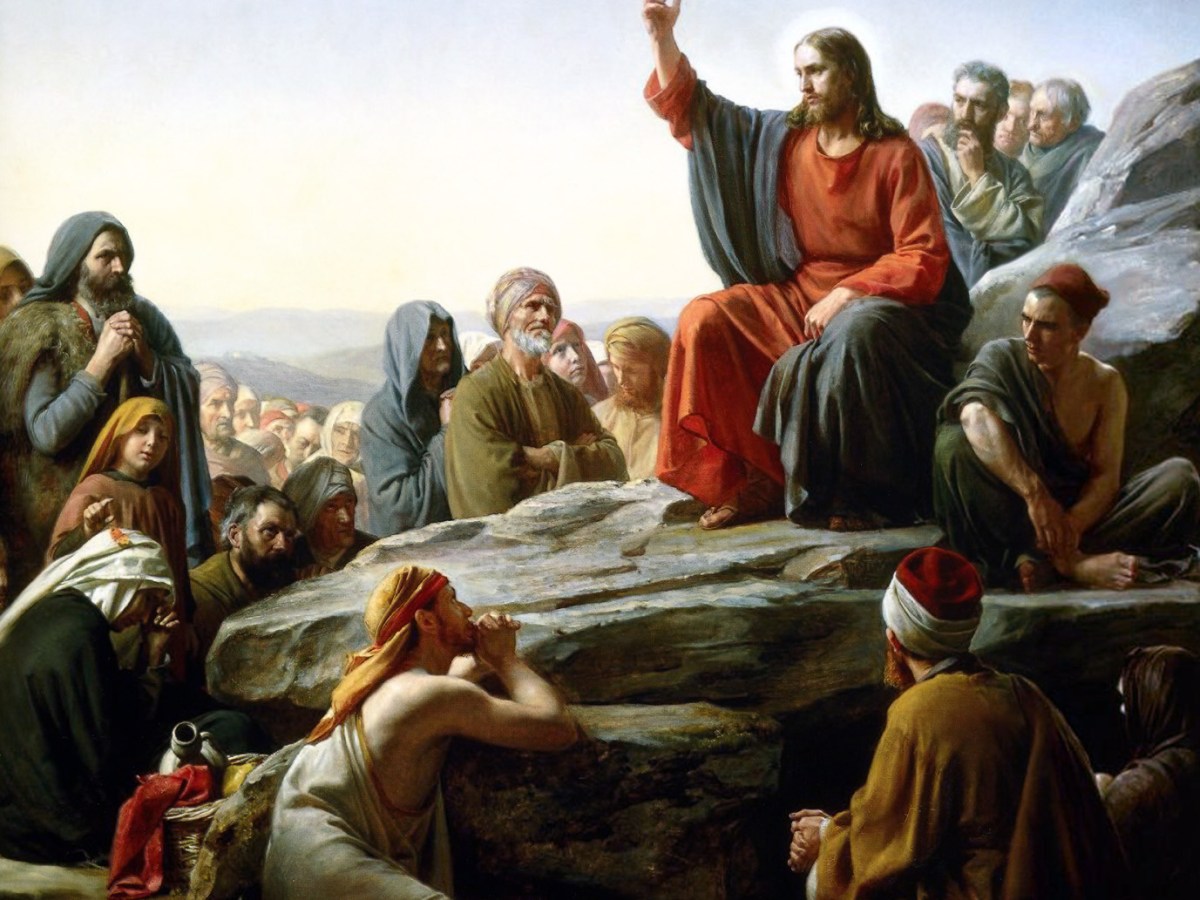
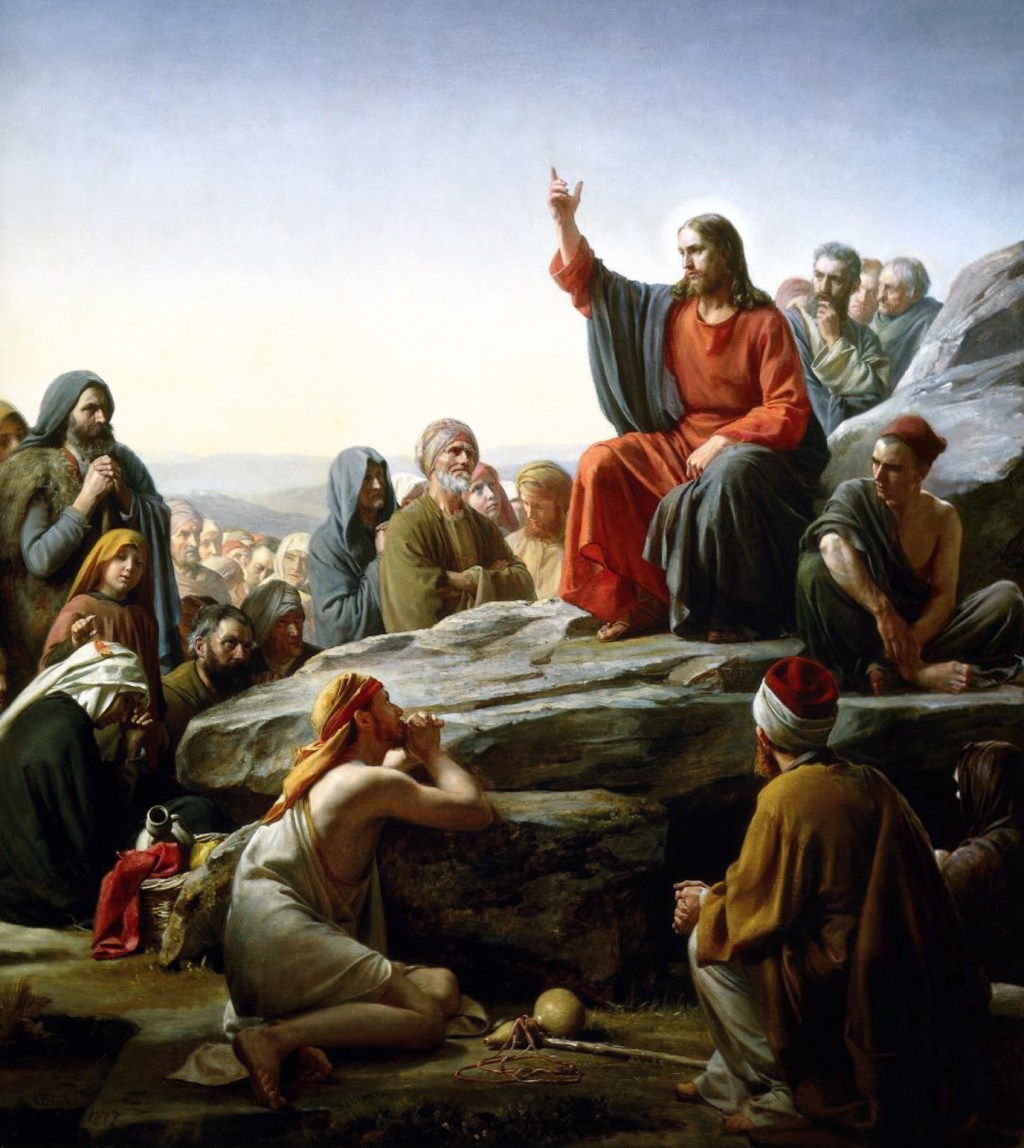
    When, in Matthew 5:1, Jesus goes up the mountain with his disciples, we get our first glimpse of Jesus as an authoritative teacher. We know that Jesus is a teacher and a healer because the Sermon on the Mount follows a summary statement of Jesus’ activity: “Jesus went throughout Galilee, teaching in their synagogues and proclaiming the good news of the kingdom and curing every disease and every sickness among the people” (4:23). 

    Matthew shows Jesus to be an active agent of God’s power among the people and an authoritative teacher, highlighted by what is arguably the most famous of Jesus’ teachings, the Sermon on the Mount. This week’s passage is the overture, if you will, to this sermon.

    The beatitudes: preamble to ministry

    The beatitudes, in my mind, serve as sort of a preamble for the way in which Jesus will interpret the law and how he will conduct his ministry. So far in Matthew, Jesus has prepared for his ministry. He has been baptized. He has been tempted by Satan. He has called his first four disciples. He has taught in the synagogues, proclaimed the good news, and cured diseases and sickness. 

    Now, he turns to teaching his disciples (the first time they are called such in the Gospel), presumably only the four that have so far been called—Andrew, Simon Peter, James, and John. The crowds, then, serve as a sort of backdrop to this sermon. They aren’t the direct audience of the sermon, but they are presumably the recipients of the divine favor Jesus says God has in store. 

    It is easy, from our pews in the wealthiest country in the world, to read the beatitudes and overlook the embodiment present in them. Let’s take them each in turn.

    “Blessed are the poor in spirit.” I read the poor in spirit as those who lack, who are materially bereft and therefore worn down by the plight of poverty. They are those whom society has left behind, who break their backs to make ends meet, whose struggle for basic survival crushes their spirits. Jesus says theirs is the Kingdom of Heaven, for there will be no poor in spirit there. God will set things right.

    “Blessed are those who mourn.” Grief comes for all of us, but mortality rates were higher in the ancient world. Parents simply could not expect their children to survive infancy, let alone make it to adulthood. It was not a given. War, food and housing insecurity, and infectious diseases could cut a life short. And yes, it is right to grieve the loss of one’s land. Jesus’ audience was living under imperial occupation. And the audience of the Gospel, encountering this story after Rome’s destruction of Jerusalem and the Temple in 70 CE, were certainly grieved by the violation of their land and sacred space. The Promised Land was occupied. Yet, to those who mourn, Jesus proclaims a coming comfort.

    “Blessed are the meek.” This is a reference to Psalm 37:11. Here “meek” refers to those who are abused by the wicked who seem only to prosper. God reassures the meek that they will inherit the land/earth. Jesus, likewise, tells the disciples that those who are abused by the wicked will inherit the land/earth—a land currently claimed and exploited by Rome for the benefit of a few. God’s rule will reverse this. 

    “Blessed are those who hunger and thirst for righteousness.” Righteousness in the Hebrew Bible (for example, Isaiah 51) refers to a total societal restructuring that includes the equitable distribution of resources. Those who hunger and thirst for righteousness, then, are those that Rome’s unjust distribution keeps at the margins of subsistence. In a reimagined society, all will have enough. And Jesus says that in God’s kingdom, these folks will be filled. 

    “Blessed are the merciful.” Jesus says that those who practice mercy, those who give of their resources and care for the outcast, will receive mercy. Rome was not known for showing mercy. Rome violently expanded its rule and heavily taxed its population to the point of food insecurity. God’s rule is different. In God’s Kingdom all will be welcome and will have plenty.

    “Blessed are the pure in heart.” The pure in heart are those who follow the will of God in their thinking and doing. Jesus will parse out the importance of a person’s “heart” in discipleship later in the sermon (5:27-30). For those that commit to God thoroughly, without hypocrisy, will see God—an “image of intimate, face-to-face encounter with God.”1

    “Blessed are the peacemakers.” I find this one particularly interesting, as Rome claimed to be the bearers of peace, but Rome’s peace only comes through domination. In Matthew, peace is not the absence of conflict; Jesus is well aware that his message will cause division (10:34-36). However, no one is ever coerced or forced into becoming a disciple. Rome subjugated people to their rule through threat and violence; entry into God’s kingdom is voluntary. “Peacemakers enact not the empire’s will but God’s merciful reign, living toward this wholeness and well-being and against any power that hinders or resists it.”2

    For those of us living comfortable lives in the wealthiest nation the world has ever known, how can we embody the beatitudes? How can we pursue justice, righteousness, and peace? How can we embody God’s promises to those that are poor, mourn, and oppressed? When the beatitudes are rooted in embodiment, rather than spiritualized, we can more clearly see the ways we could act to bring God’s kingdom into people’s lives. 

    Finally, Jesus says “blessed are those who are persecuted for justice’s sake … when people revile you and persecute you and utter all kinds of evil against you falsely on my account.” The life of a disciple of Jesus runs counter to the values of the world. Perhaps we don’t experience persecution in our modern American context in the way that early Jesus followers did—no one is looking to kill us simply because we confess Christ. But do not be deceived. When we live a life for justice for the oppressed and marginalized, when we extend mercy to the outcast, when we live the values outlined in the beatitudes, the rulers of this world will resist us. But we must persevere if we are to be blessed. 


    Notes

    1. Carter, Warren. Matthew and the Margins: A Sociopolitical and Religious Reading. Orbis Books: Maryknoll, NY (2000), 135.
    2.  Carter, Warren. Matthew and the Margins: A Sociopolitical and Religious Reading. Orbis Books: Maryknoll, NY (2000), 136.

    Commentary on Luke 2:[1-7] 8-20

    This article was first published on Working Preacher. I find it easy, maybe comforting even, to imagine the nativity events that Luke describes as tranquil: a beaming new mother and father admiring their sleeping infant while stable animals sleep around them. A silent night, indeed. 

    Yet, for those there, this was a world changing event.

    Commentary on Matthew 5:1-12

    This article was first published on Working Preacher. Matthew shows Jesus to be an active agent of God’s power among the people and an authoritative teacher, highlighted by what is arguably the most famous of Jesus’ teachings, the Sermon on the Mount. This week’s passage is the overture, if you will, to this sermon.

    Commentary on Matthew 4:12-23

    This article was first published on Working Preacher.

    Matthew’s account of the beginning of Jesus’ ministry and the call of his first disciples is a tale of two kingdoms. Matthew 4:12-23 demonstrates the call for allegiance required to be part of the Kingdom of Heaven. This allegiance runs counter to Roman imperial claims to lives, labor,…

  • Commentary on Matthew 4:12-23

    Commentary on Matthew 4:12-23

    This article was first published on Working Preacher.

    Matthew’s account of the beginning of Jesus’ ministry and the call of his first disciples is a tale of two kingdoms. Matthew 4:12-23 demonstrates the call for allegiance required to be part of the Kingdom of Heaven. This allegiance runs counter to Roman imperial claims to lives, labor, and land.

    Galilee of the Gentiles

    Matthew 4:12-13 reports that “Jesus heard that John [the Baptist] had been arrested.” John’s arrest, seemingly the catalyst for Jesus’ ministry, spurs Jesus to move from Nazareth to “Capernaum, by the sea, in the territory of Zebulun and Napthtali.” 

    Zebulun and Naphtali, of course, were two of the sons of Jacob and therefore tribes of Israel. Zebulun was the youngest son of Leah while Naphtali was the younger son of Bilhah, the woman enslaved to Rachel. Their tribal territorial allotments in the Promised Land, outlined in Joshua 19:10-16 and 32-39, were to the west of the Sea of Galilee and, by Jesus’ time, included the region of Galilee. Thus, Jesus is “God with us” (1:23) in the Promised Land; and yet, that land is currently under Roman (in other words, Gentile) occupation.

    Matthew underscores the occupation of the land by Gentiles by quoting Isaiah 9:1-2: “Land of Zebulun, land of Naphtali, on the road by these, across the Jordan, Galilee of the Gentiles—the people who have sat in darkness have seen a great light, and for this who sat in the region and shadow of death light has dawned.”

    In Isaiah’s time, the lands of Naphtali and Zebulun were under the dominion of another imperial power: the Assyrians who conquered the northern kingdom of Israel in 733-732 BCE. Isaiah’s prophecy was written in anticipation of a future king whose reign, the prophet hoped, would restore these lands and reunite the nations of Israel and Judah.1 While Isaiah was likely referring to King Hezekiah, the author of Matthew envisions the fulfillment of this prophecy with Jesus. 

    After Jesus moves to Capernaum in “Galilee of the Gentiles,” he begins preaching repentance because the “kingdom of heaven has come near,” a theme fleshed out (quite literally in the person of Jesus) in the rest of the Gospel. For Matthew, there seems to be a connection between this vision of a restored Israel and repentance. 

    Repentance is a prophetic call to return to God and follow God’s law. The pre-exilic prophets, like Isaiah, encouraged repentance. They subscribed to a theological paradigm scholars refer to as the Deutoronomism. This is a perspective that is prominent in the prophets as well as Deuteronomy, Judges, Joshua, 1-2 Samuel, and 1-2 Kings. In this view, obedience to Torah results in blessings by God, while disobedience will result in penalties/punishments. 

    While Deuteronomy through 2 Kings use this theological lens to understand their history, the pre-exilic prophets use this lens to encourage repentance in order to avoid future punishment. Jesus, taking a different approach, encourages repentance because “the kingdom of heaven has come near.” 

    The Kingdom of Heaven has come near

    By “has come near” Jesus could be referring to a temporal shift. That is, God’s rule is near in that it will soon begin so people should prepare themselves. It could also mean that Jesus understood himself to be the embodiment of God’s kingdom, thus the nearness is found in proximity to Jesus. Either way, Jesus’ message is clear: God is acting in the world. 

    The language of “kingdom” sets up God’s rule in direct opposition to Rome’s rule, thus repentance could also be understood as a choosing of allegiances. The very thing that the two sets of brothers are asked to do when Jesus calls them in 4:18-22. 

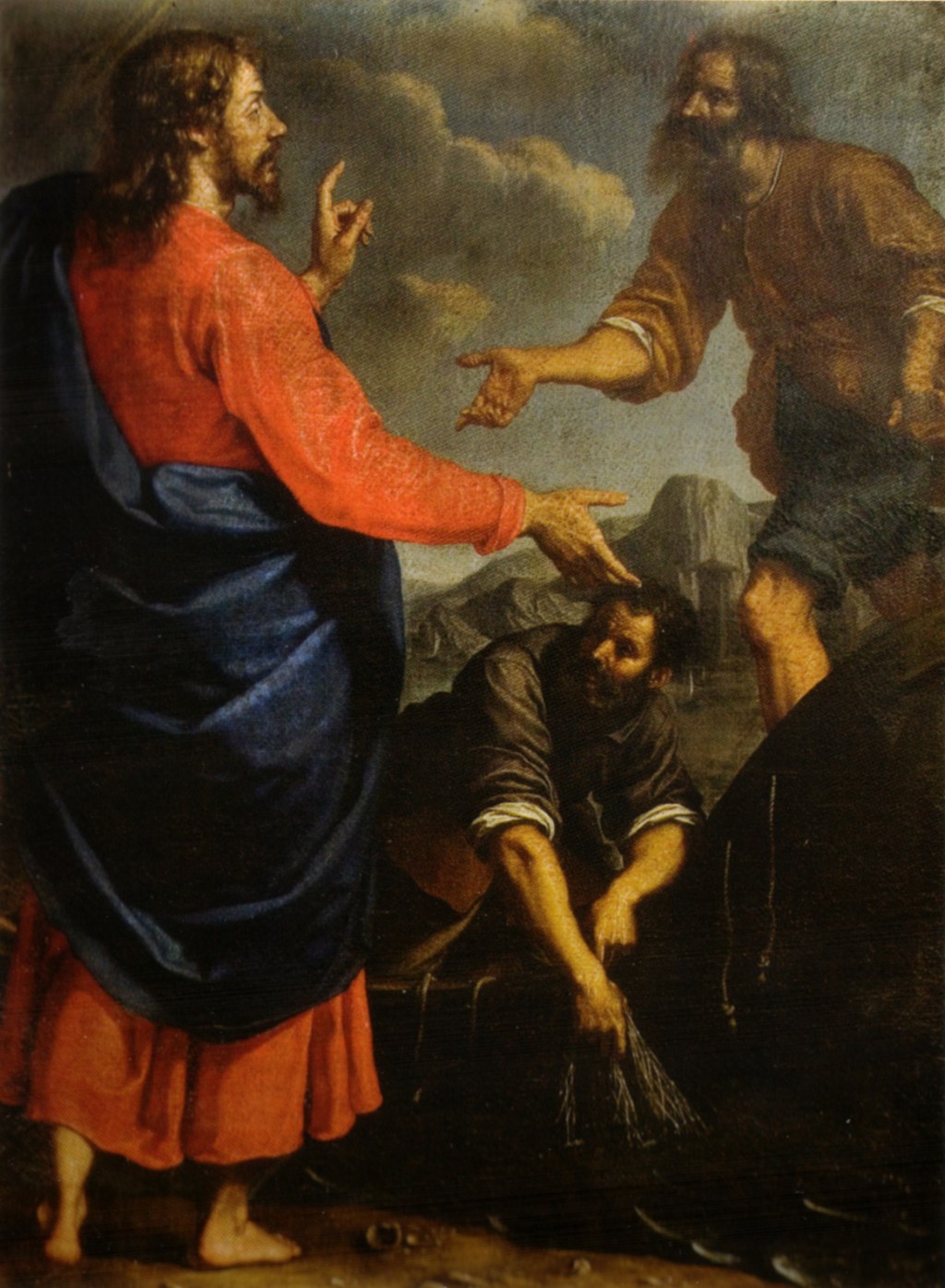
    When Jesus first sees the brothers Andrew and Simon Peter, they are fishing on the sea of Galilee. He says to them “Follow me, and I will make you fish for people” (4:19). He then sees two more brothers, James and John, in their boat with Zebedee, their father. They are mending their nets. Matthew 4:21 simply says “and he called them.” These brothers also immediately follow Jesus.

    Some have wondered why Simon Peter and Andrew would walk away so quickly. Did they know Jesus beforehand? Were the sons of Zebedee more likely to follow Jesus because they saw the encounter with Simon Peter and Andrew? Were the men somehow disgruntled in their work? Were the sons of Zebedee disgruntled with their father?

    While these are interesting questions, they cannot be answered by the text as we have it. Instead, by thinking about the call to repentance immediately preceding, the story indicates that the brothers chose their allegiance, even if we do not know why they did it so quickly. 

    How is this choosing an allegiance, you ask? As fishermen, Warren Carter notes that these sets of brothers were likely under contract with the Roman Empire. “As brothers, and possibly members of a cooperative with James and John (4:21), they have purchased a lease or contract with Rome’s agents that allows them to fish and obligates them to supply a certain quality of fish.”2 Their actions in following Jesus were a disruption, even if small, to Rome’s economic interests. 

    By choosing Jesus, the brothers choose God’s rule over Rome. They choose to “fish” their land and the people in it for God’s purposes rather than exploiting it for Rome’s gain. They choose to join Jesus’ ministry in the Promised Land rather than to align themselves with the interests of the occupiers. Rome wanted the men to catch fish to advance their imperialist expansion. Jesus wants them to catch people for God’s rule, which as Jesus will demonstrate throughout the rest of the Gospel, is a rule of mercy and justice and plenty.


    Notes

    1.  Ackerman, Susan. Isaiah in The New Interpreter’s Study Bible, 970 n. 9:1-2.
    2. Carter, Warren. Matthew and the Margins: A Sociopolitical and Religious Reading. Orbis Books: Maryknoll, NY (2000), 121.