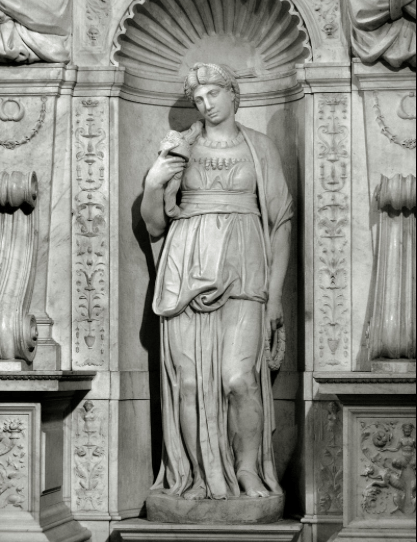
Leah’s Loveless but Productive Marriage
The matriarchs hold a special place in the Hebrew canon and society. They are so much more than “Jacob’s wives” or “the mothers of the Children of Israel.” This blog explores a bit of they dynamic of Leah’s marriage to Jacob.
Before learning of Leah’s conception, the text states that God saw that Leah was unloved (some translations such as the King James Version translate the word as hated) and opened her womb while Rachel was barren. Before both sections of Leah’s birth speeches, the text states that God is responsible for her fertility; God “opened her womb” at 29:31 and “gave heed” to her at 30:17. Before the birth of Joseph, after Jacob has ten sons and one daughter, God finally remembered Rachel and “opened her womb” at 30:22.
Reproduction in the Ancient World
The society in which Leah and Rachel lived is a far cry from the world we inhabit. Strategically planning pregnancies would have required an understanding of the female reproductive system beyond the knowledge of ancient folk and, quite frank, beyond the interest of ancient men; medical procedures like invitro and fertility drugs were obviously unavailable; and standardized pre-natal care was not an option.
Children were essential to the fuctioning of ancient household. Further, the importance of male offspring was rooted in the patriarchal societal structure of ancient Israel. Lineage was traced through the male, and with no sons, a man’s lineage ended. Allow me to quote Sharon Pace Jeansonne at length:
“Be fruitful and multiply” (1:28) is the first command of God in the Book of Genesis, and fertility is always associated with blessing throughout the Hebrew Bible. In a society where population growth was desirable and equated with political strength, and where infant mortality was high, neither men nor women believed that not wanting children was acceptable. The goal in the agrarian society was to have as many children as possible, and pray that they were boys. he stories of the matriarchs reveal the patriarchal goal of having sons to add to a man’s prestige and material well-being. However, they also present the prominent theological perspective that the God who calls Abraham out of Ur keeps the promise of descendants and is a powerful God of fertility.1
The goal in the agrarian society was to have as many children as possible, and pray that they were boys.
“Now the Lord saw that Leah was hated.”
Returning to Leah, Genisis 29:31 tells us that she was “sane’.” Gafney reminds us that the word used here doesn’t simply mean unloved or loved less, but hated. However, “the text does not say that she is hated by Jacob, leaving open the possibility that she is hated by her husband, sister, and/or father, and perhaps others.”2 The uses of this same word in the Joseph stories might shed some light on this, if one assumes that it is either Jacob or Rachel who “hates” Leah.

In the Joseph narrative, the brothers “hate” Joseph. He is arrogant and acting as if he were the oldest of the sons. They first hate him in 37:4 when they see that Jacob loves him more (Jacob is notorious at playing favorites), they hate him more when Joseph tells the brothers his dream in 37:5, and they hate him even more when they realize in 37:8 that the dream means Joseph will have dominion over them.
Within this context, at least, this word seems to mean more than an emotional response, though not completely separate from it. Joseph’s brothers hate him because he is a younger son acting as if he is the eldest. He’s operating in a position that, at least in his brothers’ minds, does not belong to him.
Taking this into consideration, the problem in the Leah/Jacob union is not Leah; it is that Leah is not Rachel. Leah is the first wife, the chief wife. She is also the wife that is producing offspring. Jacob worked fourteen years for Rachel. Jacob wanted Rachel from the moment they met. Laban tricked Jacob into marrying Leah. There is cause for either Jacob or Rachel, if not both, to “hate” Leah since she holds a position that, by their estimation, ought to belong to Rachel.
A Complicated Marriage
Now, whatever this hatred meant sexually for Leah and Jacob is unclear. What the text does reveal about their marital relationship is two-fold. First, she bore him six sons and one daughter, presumably within the (second set of) seven years he was working for Laban to “earn” Rachel, although Gafney suggests that it could be over a longer period of time if one assumes that Leah does not get pregnant again until after the previous child is weaned. Either way, this indicates the fertility of Leah.
Secondly, Leah did not control Jacob’s sexual activity as much as Rachel did. This is demonstrated in 30:15 when Rachel gives Leah permission to have sex with Jacob.
You may be asking: “if he didn’t like her, couldn’t he just divorce her?” The answer is yes, but there could be several reasons why Jacob did not divorce Leah. Perhaps he was afraid of what Laban might do if he did. Perhaps he felt an obligation toward his kinswoman that would not allow him to forsake her completely. Or perhaps he realized that she was the wife that would provide the children to carry on his lineage.
The text does not indicate any reason why Jacob did not divorce Leah. There was no Torah to define his actions, but there must have been something that kept Jacob bound to Leah, but whatever that something is, the author either takes it for granted or finds it to be of little import for the purpose of this narrative.
So, as I’ve already stated, Leah is the first to become pregnant, and the narrative sets Leah’s fertility and rejection by Jacob in contrast with Rachel’s barrenness and favor. Leah bears four children consecutively in 29:31-35. The first three naming speeches are all linked to her relationship with Jacob, and three of the four are connected to her belief in God. These naming speeches will be discussed in later posts.
Just for fun: what if all of Leah’s pregnancies were in that first 7 years?
In Leviticus 12, the days of ritual uncleanness after the birth of a child are laid out for women based on the sex of the child. It is unlikely that Jacob and the women would have practiced such strict guidelines, as this story is set in a time prior to the giving of the law. Regardless, of the amount of time spent after the birth of one child and the conception of the next, it is evident that Leah spent very little of her first years of marriage without being pregnant if one assumes these pregnancies all occurred during the second set of 7 years Jacob worked for Laban.
It that is the case, she had seven children in seven years!
Just for fun, if one assumes that a) all of these pregnancies occurred in the second set of 7 years that Jacob worked for Laban to earn Rachel and b) that all seven of Leah’s pregnancies were full term, that is 40 weeks, then, there were only 595 days over those 7 years that she was not pregnant.
When you further consider that her slave-woman Zilpah gives birth to two more children for her then that means there are only 35 days over that 7 years that Leah is not pregnant or concerned with a pregnancy.
It’s possible that Leah’s perpetual pregnancies, rather than Rachel’s control, may be the cause of minimal sexual activity between her and her husband. Genesis 30:9 says that “Leah saw that she stopped bearing,” but the text gives no indication that it is due to a sexual abstinence with Jacob. What the text does indicate is that, regardless of how many children Leah were to bear for Jacob he would never satisfy Leah’s desire for him. This becomes evident in the speeches that accompany the naming of her children.
Leah’s level of fertility borders on the absurd and is a clear indication that the author of the text is more concerned with continuing the theme of God’s divine intervention in the lives of the ancestral families than it is with relaying “facts” in the way that we moderns would prefer.
- Sharon Pace Jeansonne. The Women of Genesis: From Sarah to Potiphar’s Wife, (Minneapolis: Fortress Press, 1990), 79.
- Wilda C. Gafney, Womanist Midrash: A Reintroduction to the Women of the Torah and the Throne (Westminster John Knox Press: Louisville, 2017), 64.
Other posts in this series
Bilhah and Zilpah: The Enslaved Matriarchs